What are the guidelines for VLF testing?
Oct 21, 2025
| Standard / Guideline | Primary Scope / Application | Key Details |
|---|---|---|
| IEEE 400.2 | Field testing of shielded power cable systems (5 kV and above) using VLF (below 1 Hz) | Defines procedures for withstand (proof) and diagnostic tests on extruded and laminated dielectric cables. |
| GB/T 33678-2017 | Technical specifications for VLF-LF 3D lightning location networks | Applies to the production, construction, testing, and operation of lightning detection networks. |
| GA/T 1372-2017 | Technical requirements for VLF induction intrusion detectors | Applies to the design, manufacture, and testing of security intrusion detectors. |
Key Technical Details of VLF Testing
VLF testing is primarily used for withstand and diagnostic testing of medium-voltage power cables, using an AC signal with a frequency less than 1 Hz to replace bulky 50/60 Hz test equipment .
Common Test Parameters: The most commonly used commercial VLF test frequency is 0.1 Hz, though other frequencies like 0.05 Hz and 0.02 Hz are also used. Testing voltages are determined based on the cable's rated voltage and the purpose of the test (acceptance or maintenance) .
Test Duration: Recommended test times can vary. For maintenance testing, a common duration is 15 minutes, while acceptance tests may run from 15 to 60 minutes.
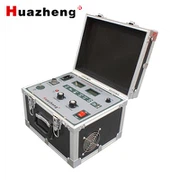
Equipment and Safety: The test device, often called a VLF hipot tester or VLF withstand test device, is designed to be portable and fully automated. Always follow the specific model's operating manual and adhere to general high-voltage safety practices during testing .
Application and Testing Process
Purpose of Tests: VLF testing is used for acceptance testing after installation to detect installation damage, and for maintenance and diagnostic testing during the cable system's operational life to assess its condition and locate deteriorating areas.
Testing Best Practices:
Prepare cable line diagrams and identify connection points before starting.
If a fault is found during a withstand test, fault locating should be performed.
After the test is complete or interrupted, the test sample must be immediately grounded for discharge.
The guidelines for VLF testing can vary based on your specific equipment and local regulations. For the most accurate and safe procedures, you should always consult the full text of the relevant standards and the manual for your specific test equipment.