Cable Tester

Your Professional Cable Tester Supplier


Our goal is to become your true partner in the field of cable tester China. Beijing Huazheng Technology Co., Ltd. is an enterprise with outstanding innovation capabilities in the field of high voltage testing equipment. We have established a comprehensive pre-sales, sales, and after-sales service system to provide customers with comprehensive support and solutions. The factory has accumulated rich manufacturing experience. The price is competitive and the product is quality-assured, which is a good choice for your long-term cooperation.


Why Choose Us


Customized solutions

We understand that each client's needs are unique, so we can tailor solutions to meet your specific requirements to meet individual client needs.


Quality control

We strictly abide by the international quality management system and strictly control every link from raw material procurement, production process, product quality inspection, etc. to ensure the stability and reliability of our products and services.


Our service
The company has a professional sales team to provide you with high-quality pre-sales consulting services. During the order production process, customers can communicate with us at any time to understand the production progress. At the same time, we provide high-quality after-sales service to meet the different needs of customers.
First 12 Last 1/2

 
Advantages of Cable Tester
 
01/

Fast and accurate: The cable tester adopts advanced digital signal processing technology, which significantly improves the speed and accuracy of locating cable faults compared to traditional manual detection methods. This helps power workers quickly identify the fault point and improve maintenance efficiency.

02/

Easy to operate: The tester adopts a combination of buttons and a display screen, similar to ordinary instruments and equipment, so the operation is simple, convenient, and easy to master. Users can quickly get started without professional training.

03/

Strong adaptability: The cable tester is suitable for various types of cables, such as power cables, signal cables, and communication cables. Its wide applicability enables it to meet the practical needs of different users.

04/

High reliability: The tester adopts high-precision sensors and precise circuit design, which can accurately capture signals in the cable, effectively avoiding false positives and missed detections. This ensures the reliability of the test results and improves the accuracy of fault localization.

05/

Fully functional: The cable tester has multiple testing functions, such as low-voltage pulse method and high-voltage flashover method detection. These functions enable the tester to cope with different types of cable faults and provide users with comprehensive solutions.

06/

High testing accuracy: The tester adopts high-speed data sampling technology, with a high reading resolution of up to 1m. At the same time, the test results are displayed in an intuitive data form on a large LCD screen, making it easy for users to determine the fault situation.


Applications of Cable Tester

Continuity Testing: One of the essential functions of a cable tester is to check for continuity in the wires inside a cable. Continuity testing verifies that each wire or fiber within the cable is correctly connected and unbroken, ensuring the signal can travel uninterrupted from one end to the other.


Identifying Wiring Configurations: Cable testers are used to identify the wiring configuration of network cables. This is particularly important for ensuring that Ethernet cables are wired correctly and to the applicable standard.


Detecting Wiring Faults: Cable testers are adept at detecting a variety of wiring faults, including shorts, opens, reversed pairs, and crosstalk interference. These faults can significantly degrade network performance, causing data transmission errors and reducing reliability.


Measuring Signal Attenuation: More advanced cable testers can measure signal attenuation, which is the loss of signal strength as it travels through a cable.


Testing for Cable Length: Another capability of advanced cable testers is to measure the actual length of a cable, as well as identify any breaks or cuts within it. This information is vital for troubleshooting network issues, especially in large-scale installations with extensive cable runs.

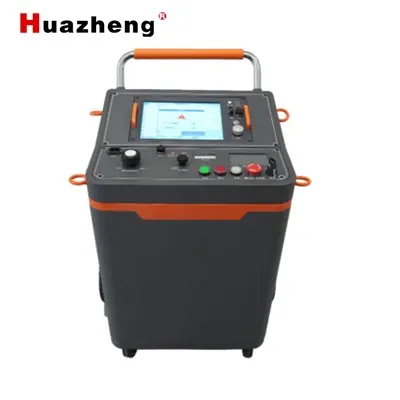
HZM7080 Underground Cable Fault Locator Intelligent Cable Pipeline Detector


Specification of Cable Tester


Function

Output composite pulse width frequency signal, signal coupling output, signal directly connected output, display output voltage, output current, circuit impedance, residual battery voltage, and dynamic indication of transmission state

Power supply

Live identification model: 9.6V / 6Ah lithium battery, full power continuous operation for about 8 hours (3 levels output)

Output method

Live identification model: Automatic identification, caliper coupling during live identification; direct connection output during power identification

Power outage identification type: Only power outage identification direct connection output

Frequency

6 Adjustable:640Hz,1.28KHz,2.56KHz,3.84KHz,6.50KHz,8.05KHz

Output interface

Waterproof aviation socket

Output power

Maximum 15W, 5 Levels adjustable, automatic real-time impedance matching

Output voltage

The maximum peak value is about:110V

Armored damaged mode

Yes

Transmitter clamp

Inner diameter:φ125mm Wire length:3meter

Directed connection clamp

Caliber:Max 24mm Wire length:1meter

Transmitter clamp magnetically saturated

40A(50Hz)

Human-computer interaction

Physical buttons, touch screen , gesture recognition

Auto shut off

Yes, no operation, no output for 30 minutes of automatic shutdown, the time can be set

Automatic standby

Yes, the default no operation for 5 minutes to automatically reduce the screen brightness to save power, the time can be set

External voltage detection

Yes, up to 150V

Charging port

Circular charging interface, DC mark

Fixed parts update

Support, is updated via USB

Transmitter size

275mm×226mm×150mm

LCD size

Length width 120mm×70mm; Display field 110mm×62mm

Working temperature

-10℃~40℃

Storage condition

-20℃~50℃,≤95%RH, no condensation

Working temperature

-10℃~40℃

Instrument quality

Transmitter about 2.28kg; Transmitter clamp about 1.12kg; The direct connection test clip is about 170g, and the total mass is about 4.44kg

Withstand voltage

AC 3700V/rms(Before the top surface and bottom surface of the instrument box)

Electromagnetic characteristics

IEC61326(EMC)

Refer to safety regulations

IEC61010-1(CAT Ⅲ 300V,CAT IV 150V,class of pollution 2)


Types of Cable Tester

 
1

Continuity Testers: Continuity testers are the most basic form of cable testers, designed to check if a cable is functioning as intended by determining whether there's a continuous electrical path through the cable.

2

Wiremap Testers: Wiremap testers are essential when verifying that each wire in a cable is correctly terminated at both ends. They ensure that the wiring configuration.

3

Signal Testers: Signal testers are designed to check the strength and integrity of the signal being transmitted through the cable. These testers analyze the quality of the signal and measure parameters such as loss and interference.

4

TDR (Time Domain Reflectometer) Testers: TDR testers are advanced devices that locate breaks or faults within a cable by sending a signal down the line and measuring the time it takes for the reflection to return.

5

Certification Testers: Certification testers are high-end devices used to verify that a cable meets specific standards. These testers go beyond basic continuity or wiremap testing by measuring performance criteria like crosstalk, insertion loss, and return loss.

6

PoE (Power over Ethernet) Testers: PoE testers are specialized tools designed to test and verify PoE connections. These testers ensure that the correct voltage and power levels are supplied to devices such as IP cameras, VoIP phones, and wireless access points through Ethernet cables.

7

Network Cable Testers: Network cable testers are multifunctional devices designed to assess the performance of data cables, particularly in Ethernet networks. These testers provide detailed information on cable length, wiring configurations, and signal integrity. Many modern network cable testers also offer diagnostic features, such as checking for network connectivity, speed, and identifying connected devices.

8

Fiber Optic Cable Testers: Fiber optic cable testers are highly specialized devices used to test the integrity and performance of fiber optic cables. These testers measure light transmission loss, signal integrity, and other fiber-specific parameters.


Use Requirements of Cable Tester


Before you use a cable tester, you should prepare your cables for testing. This means making sure that they are properly terminated, labeled, and routed. You should also inspect your cables for any physical damage, such as cuts, kinks, or bends. If you find any defects, you should replace or repair your cables before testing them. You should also avoid running your cables near sources of interference, such as power lines, fluorescent lights, or electrical appliances.


Packaging and Shipping of Cable Tester


Transportation

Land, air, sea

Transport Package

Wooden Box with Foam Inside


FAQ

Q: What does a cable tester do?

A: A cable tester is an electronic device used to verify the electrical connections in a signal cable or other wired assembly.

Q: What is the difference between a cable tester and a multimeter?

A: The difference between a multimeter and a voltage tester is the non-contact voltage tester only detects whether or not voltage is present.

Q: Do I need a cable tester?

A: Testing your Ethernet cable is an essential step in maintaining a reliable and high-speed internet connection within your local area network or connected telco devices.

Q: Can you test a cable with a multimeter?

A: If a cable is broken or has a short, it can cause problems with electrical equipment. Testing cables with a multimeter can help to identify these problems so that they can be repaired. help to prevent electrical accidents.

Q: How to perform a cable test?

A: Place both plugs of the same cable on the wooden surface of your table. Don't touch the plugs, use the multimeter's probes to keep them down. Touch both plug sleeves (the long parts of the plug) with the probes – the red one going to one plug, the black one to the other.

Q: Which tool is used to test cable wiring?

A: A cable tester is an essential tool for installing, maintaining, or troubleshooting wired network systems. It assesses the functionality and integrity of various types of network cables.

Q: What is a RJ45 cable tester?

A: An RJ45 network cable tester is a device designed to test the wiring and connections of cables with RJ45 connectors, commonly used for Ethernet and LAN cables.

We're professional cable tester manufacturers and suppliers in China, specialized in providing high quality customized service. We warmly welcome you to buy cable tester for sale here from our factory. For price consultation, contact us.

Cable Fault Bridge, High Voltage Pulse Generator, Cable Fault Pinpointer

(0/10)

clearall