


HZ-501A Underground Cable Fault Pre Locator
HZ-501A Underground Cable Fault Pre Locator Products Description I.Product Overview The cable fault pre-locator features a 12.1-inch industrial-grade touchscreen all-in-one computer and a user-friendly software interface for intuitive human-computer interaction testing. It utilizes...
HZ-501A Underground Cable Fault Pre Locator
Products Description
I.Product Overview
The cable fault pre-locator features a 12.1-inch industrial-grade touchscreen all-in-one computer and a user-friendly software interface for intuitive human-computer interaction testing. It utilizes industrial-grade integrated circuits and components, along with a built-in high-capacity lithium-ion battery, ensuring stable and reliable performance with simple operation.
This cable fault pre-locator is a specialized instrument used for measuring and analyzing power cable conditions and fault distances. By integrating modern electronic technology with computer technology, it enables signal filtering, data acquisition, processing, graphical display, and analysis to accomplish cable velocity measurement, cable length testing, and cable fault distance detection.
The device is suitable for detecting low-resistance, short-circuit, open-circuit, and disconnection faults in power cables, high-frequency coaxial cables, street light cables, and buried wires of various materials, cross-sections, and insulating media, as well as high-resistance leakage and high-resistance flashover faults. Its technical parameters comply with the following standards:
GB/T 18268.1 "Immunity of Test Equipment for Industrial Locations"
DL∕T 849.1-2019 "General Technical Specifications for Special Test Equipment for Power Equipment Part 1: Cable Fault Flash Tester"
JJF 1042-2020 "Calibration Specification for Cable Fault Testers"
Classification of Power Cables
Classification by Voltage Withstand Level:
Low-voltage cables: cables rated 6kV and below
Medium- and high-voltage cables: cables rated above 6kV and up to 35kV
High-voltage cables: cables rated 66kV and above
Classification by Insulating Medium:
Oil-impregnated paper dielectric cables: mostly medium- and high-voltage cables
Non-drip paper dielectric cables: mostly medium- and high-voltage cables
Cross-linked polyethylene (XLPE) dielectric cables: mostly medium-, high-, and extra-high-voltage cables
Other rubber and plastic dielectric cables: mostly medium-, high-, and low-voltage cables
Oil-filled cables: mostly high-voltage cables
Classification by Structural Type:
Cables without an outer metal shielding layer: mostly low-voltage cables
Cables with an outer metal shielding layer: mostly medium- and high-voltage cables and above
Cables with a metallic inner sheath: mostly high-voltage cables
Analysis of Power Cable Fault Types and Characteristics
Power Cable Fault Classification:
By fault location: connector fault; body fault
By fault form: closed fault; exposed fault
By cable structure: main insulation fault; inner and outer sheath fault
Analysis of Cable Fault Characteristics:
Open-circuit fault: Occurs when the cable insulation is normal, but the conductor cannot transmit voltage due to issues such as broken wires or high resistance. It often coexists with low-resistance or high-resistance faults.
Low-resistance fault: Occurs when the cable insulation is damaged, creating a phase-to-phase or phase-to-ground fault that can be directly tested using the "low-voltage pulse method." The resistance is typically below several hundred ohms. A resistance of "zero" is considered a short-circuit fault, a special case of low-resistance faults.
Leakage high-resistance fault: Occurs when the cable insulation is damaged and a fixed resistance channel is formed, but the fault cannot be directly measured by the "low-voltage pulse method." The resistance is usually above several hundred ohms. During on-site DC withstand voltage testing, the leakage current increases continuously with the applied voltage, exceeding the cable's standard requirements.
Flashover high-resistance fault: Occurs when, within the cable's pre-test voltage range, the leakage current suddenly increases significantly at a certain voltage, exceeding the cable's specifications. At the fault point, the insulation is damaged but does not form a fixed resistance channel.
Methods for Determining Cable Fault Characteristics:
Three common methods are used:
(1) Judgment using an insulation resistance meter and multimeter.
(2) Judgment based on cable pre-test results.
(3) Judgment using the cable fault pre-locator.
Generally, low-resistance and open-circuit faults can be directly identified through the "low-voltage pulse method" waveform from a multimeter or the cable fault pre-locator.
Power Cable Fault Testing Procedure:
The cable fault pre-locator typically follows these steps to locate faults in buried power cables:
(1) Analyze the nature of the cable fault and understand the withstand voltage level and insulating medium of the faulty cable.
(2) Use the "low-voltage pulse" function of the cable fault pre-locator to test the length of all phase conductors of the faulty cable and calibrate the signal propagation velocity.
(3) Select an appropriate testing method and use the cable fault pre-locator for preliminary fault detection.
(4) Precisely locate the cable fault point, including determining the direction and depth of the buried cable and the exact fault location.
(5) Perform error analysis on the cable fault test results, including measurement error, propagation velocity error, misinterpretation error, and instrument error.
II. Features
12.1-inch industrial-grade computer control with touchscreen operation
Windows XP operating system for user-friendly operation
Capable of measuring wave velocity and fault distance
Fully automatic continuous sampling with accurate waveform capture
Utilizes embedded industrial computer technology with impact high-voltage flashover and low-voltage pulse methods
User-friendly software with a full Chinese menu and on-screen touch buttons; simple button definitions and clear operation
High fault detection success rate, testing accuracy, and convenience, surpassing domestic testing equipment
Ultra-bright, large LCD screen for clear waveform observation even in direct sunlight; powerful data processing capabilities with a user-friendly interface
Extensive waveform storage function for organizing and recalling field-tested waveforms
Standard USB printer interface
Simple operation and high reliability with excellent cost-effectiveness
Built-in polymer lithium battery for testing open-circuit and low-resistance short-circuit faults in environments without external power
III. Technical Parameters
Sampling frequency: 400 MHz
Low-voltage pulse amplitude: 400 V
Minimum resolution: 0.1 m
Low-voltage pulse width: 0.25 µs / 2 µs / 4 µs
Testing blind spot: ≤10 m
Ranging range: ≥68 km
Measurement error: ≤±(0.5% × L + 1 m), where L is the cable length
Cable length testing categories: <1 km (short distance); <3 km (medium distance); >3 km (long distance)
Power supply: AC 110 V–240 V, 50 Hz/60 Hz; built-in 10,400 mAh lithium battery
Operating conditions: temperature -25°C to +65°C, relative humidity ≤90%, atmospheric pressure 750 ± 30 mmHg
Dimensions and weight:
Cable fault pre-locator: 430 × 380 × 220 mm, approximately 10 kg
Pulse coupler: 430 × 380 × 220 mm, approximately 10 kg
FAQ
1. When can I get a price quote?
You can contact us online or submit an inquiry. We typically provide a quote within 24 hours after receiving your request.
2. How do you handle after-sale service for overseas customers?
For issues occurring with our products, we offer:
12-month warranty coverage (see details below).
Online technical guidance to troubleshoot problems remotely.
Replacement parts shipped promptly based on your needs.
On-site support (if required): Our engineers can travel abroad to resolve critical issues.

3. What is the warranty period?
Our standard warranty period is 12 months (1 year). During this time, we provide:
Free technical support.
Replacement parts for manufacturing defects.
Solutions tailored to your specific issue.
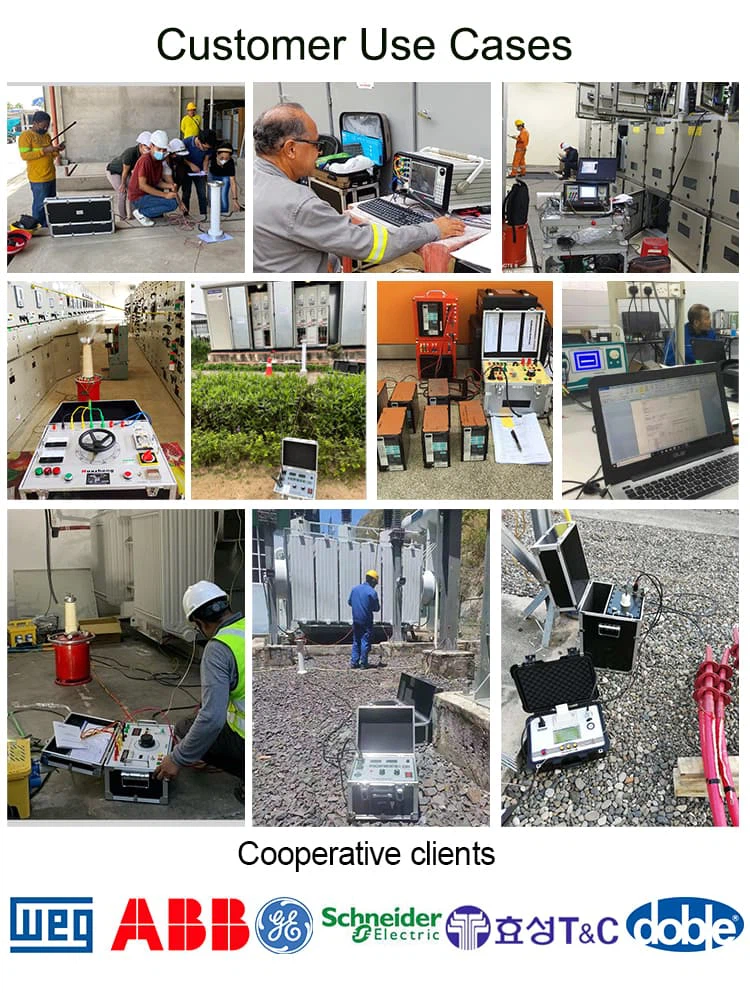
Products Cases
Company Profile

Certifiacation

Related Products

Hot Tags: hz-501a underground cable fault pre locator, China hz-501a underground cable fault pre locator manufacturers, suppliers, factory, underground cable fault locator, cable tester locator, mobile electrical testing laboratory vehicle, underground pipeline locator, underground cable fault locater, underground cable fault finder


Send Inquiry
