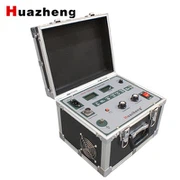
What is the Pensky Martin test method?
Apr 22, 2025
The Pensky Martens Test is a standardized method for determining the flash point of liquid fuels, lubricants, or other petroleum products, belonging to the closed cup method. Flash point refers to the lowest temperature at which a liquid releases enough flammable vapor under specific conditions to ignite instantly when mixed with air and exposed to an open flame. This test is of great significance in evaluating the flammability, transportation safety, and storage risks of liquids.
Core points
Testing principle:
The sample is uniformly heated in a sealed test cup and the temperature distribution is ensured to be uniform through mechanical stirring.
At regular temperature intervals, introduce an open flame into the cup using an ignition source (such as a flame or electric spark) and observe for flash ignition.
Equipment features:
Closed cup design: The test cup comes with a closable lid, simulating a sealed environment (such as a storage tank or transport container) to prevent vapor from escaping.
Automatic or manual operation: Modern equipment often uses automated control, but traditional methods require manual ignition and recording.
Applicable samples:
High viscosity liquids (such as heavy oil, lubricating oil) or dark samples (such as asphalt).
Not suitable for highly volatile liquids such as gasoline, which typically use the Tagliabue method.
International standards:
ASTM D93: American Society for Testing and Materials standards.
ISO 2719: International Organization for Standardization standards.
GB/T 261: Chinese national standards.