


HZJQ-3 3 Cups 80 kV Transformer Oil BDV Tester
Many power systems, railway systems, large-scale petrochemical plants, and enterprises rely on electrical equipment whose internal insulation is primarily of the oil-filled type. Therefore, testing the dielectric strength of insulating oil is both common and necessary. To meet market demand, we have independently developed and produced a series of insulating oil dielectric strength testers in accordance with national standard GB/T507-2002, industry standard DL429.9-91, and the latest Electric Power Industry Standard DL/T846.7-2004. This instrument, which uses a microcontroller as its core, operates fully automatically with high accuracy, significantly improving work efficiency and reducing the labor intensity of workers.
HZJQ-3 3 Cups 80 kV Transformer Oil BDV Tester
I. Key Function And Feature
1.With a microprocessor and three cups, the instrument automatically performs the withstand voltage test for oil circulation, with a voltage range of 0–80 kV (including boosting, maintaining, mixing, standing, calculation, printing, and other operations).
2.Displayed on a large-screen LCD with English menu prompts.
3.The instrument is easy to operate: the operator only needs to perform a simple setup, and the instrument will automatically conduct the 1–3 oil sample pressure test. For each oil sample, the breakdown voltage value and the number of cycles are automatically stored. After the test is complete, the thermal printer will print the breakdown voltage value and the average value.
4.Power-down protection: the instrument can store up to 100 test results and display the current ambient temperature and humidity.
5.Uses a microcontroller to control the speed of voltage boosting, with voltage frequency accuracy at 50 Hz, ensuring that the entire process is easy to control.
6.Equipped with over-voltage, over-current, and limit protections to ensure operator safety.
7.Displays the measured temperature and system time.
8.Can communicate with a computer via a standard RS232 interface.
II. Major Technical Indicators
| Item | Specification |
| Output voltage | 0~80 kV (optional) |
| Voltage distortion rate | < 3% |
| Voltage raising speed | 0.5~5 kV/s (adjustable) |
| Standing time | 15 min (adjustable) |
| Boosting interval | 5 min (adjustable) |
| Boosting times | 0~10 times |
| Booster capacity | 1.5 kVA |
| Measuring accuracy | ±3% |
| Supply voltage | AC 220 V ±10%, 50 Hz / 60 Hz |
| Power consumption | 200 W |
| Operating temperature | 0 ℃~45 ℃ |
| Operating humidity | < 75% RH |
III.Oil Cup Cleaning Method And Common Fault Clearances
Oil Cup Cleaning Method
1.To maintain accurate test results and ensure the longevity of the equipment, it is important to properly clean the oil cup. Follow these steps:
2.Turn off the instrument and disconnect it from the power source to ensure safety before cleaning.
3.Remove the oil cup carefully from the instrument.
4.Drain any remaining oil from the cup and dispose of it according to the appropriate waste disposal guidelines.
5.Clean the oil cup with a soft cloth or brush to remove any residual oil, dust, or debris. Use a non-abrasive cleaner to avoid damaging the surface.
6.Rinse the oil cup with clean, deionized water to ensure that no cleaning solution remains inside the cup.
7.Dry the oil cup thoroughly with a clean, lint-free cloth or allow it to air dry completely before reassembling.
8.Check the electrodes and cup sealing to ensure no oil residue is left on the components and that everything is in good condition.
9.Reassemble the oil cup and ensure it is securely placed back in the instrument.
Agitating Blade Cleaning Method
1.Wipe the agitating blades repeatedly with a clean silk cloth until no fine particles are visible on their surfaces. Do not touch the surfaces with bare hands to avoid contamination.
2.Use forceps to hold the blade and submerge it in petroleum ether for cleaning.
3.Dry the blade with a blower while still holding it with forceps to ensure it is completely dry.
4.Use forceps to hold the blade and submerge it in the oil sample to be tested, rinsing it thoroughly.
Oil Cup Storage
Method 1: Post-Test Oil Cup Maintenance
Fill the cup with clean, good-quality insulating oil after the test is finished and place it in a stable position to ensure no contamination.
Method 2: Cleaning and Drying the Cup
Clean and dry the cup following the procedures outlined above. After cleaning, place the cup in a vacuum dryer for further drying.
Note:
The oil cup and agitating blade should be cleaned using the above procedures after the first test and after tests involving poor-quality oil.
Common Fault Clearances
1. Power Light Off, Screen Display Off
① Check the connection of the power plug.
② Inspect the condition of the protective fuse inside the power plug.
③ Verify that the socket is supplying power.
2. No Oil Cup Breakdown
① Check the insertion of connectors on the circuit board.
② Ensure proper contact of the high-voltage switch cap.
③ Verify the operation of the high-voltage contacts.
④ Inspect for any breaks in the high-voltage line.
3. Display Contrast Issue
① Adjust the potentiometer on the circuit board.
4. Printer Failure
① Check the connection of the printer power cable.
② Check the connection of the printer data cable.
FAQ
1. When can I get a price quote?
You can contact us online or submit an inquiry. We typically provide a quote within 24 hours after receiving your request.
2. How do you handle after-sale service for overseas customers?
For issues occurring with our products, we offer:
12-month warranty coverage (see details below).
Online technical guidance to troubleshoot problems remotely.
Replacement parts shipped promptly based on your needs.
On-site support (if required): Our engineers can travel abroad to resolve critical issues.

3. What is the warranty period?
Our standard warranty period is 12 months (1 year). During this time, we provide:
Free technical support.
Replacement parts for manufacturing defects.
Solutions tailored to your specific issue.
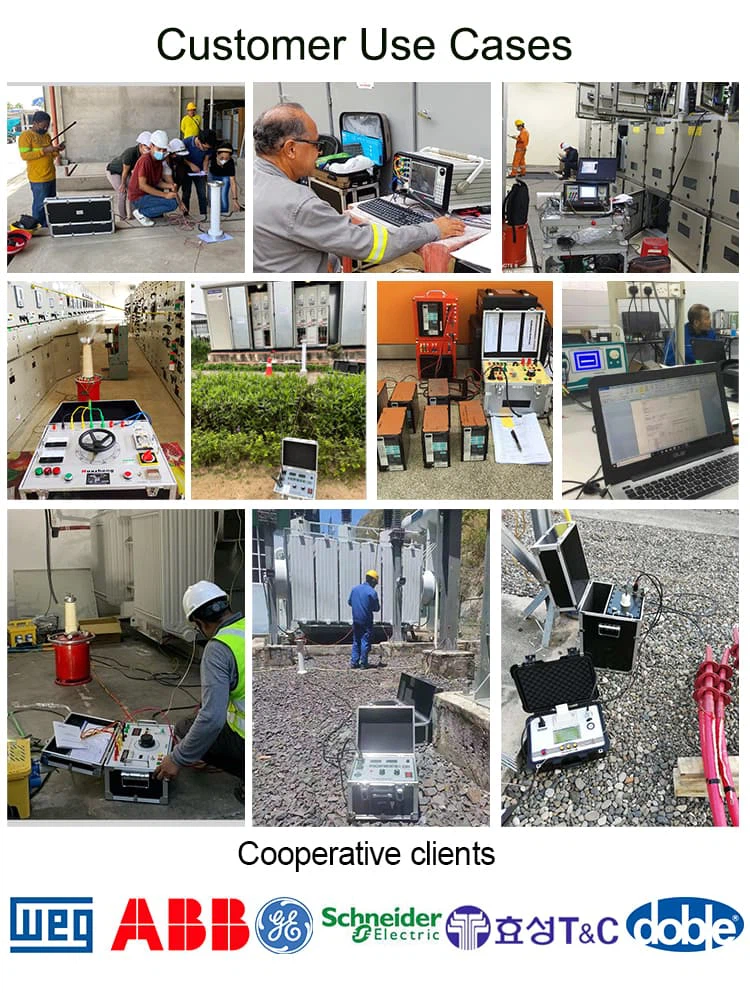
Products Cases
Company Profile

Certifaction

Related Products


Send Inquiry
