

How to measure the interfacial tension of a liquid - diamond interface with an Interfacial Tension Meter?
Jan 01, 2026
Hey everyone! I'm an interfacial tension meter supplier, and today I'm gonna chat with you about how to measure the interfacial tension of a liquid - diamond interface using an interfacial tension meter. This is a pretty cool topic, especially if you're into materials science or industrial applications.
Understanding Interfacial Tension
First off, let's quickly go over what interfacial tension is. Interfacial tension is the force acting per unit length at the interface between two immiscible phases, like a liquid and a solid (in this case, diamond). It's kind of like a boundary layer where the molecules of the two phases interact in a specific way. This tension affects how the liquid wets the diamond surface, how a liquid droplet spreads or beads up on it, and so much more.
For industrial applications, understanding the interfacial tension of the liquid - diamond interface can be key. In cutting and grinding processes, where diamond tools are widely used, the right amount of lubricant with specific interfacial properties can significantly improve tool life and machining quality. In the electronics industry, especially when dealing with diamond substrates for high - performance chips, the wetting behavior of liquid coolants can impact heat dissipation efficiency.
Why Use an Interfacial Tension Meter?
An interfacial tension meter is designed to measure this tricky property accurately. It works based on different principles, such as the Wilhelmy plate method, du Noüy ring method, or pendant drop method. These methods rely on the relationship between the force exerted on a probe (plate, ring, or the shape of a drop) and the interfacial tension.
Let's take the Wilhelmy plate method as an example. A thin plate is immersed in the liquid near the diamond surface. The interfacial tension between the liquid and the diamond causes a force to act on the plate. The tension meter measures this force, and based on the geometry of the plate and some physical constants, it can calculate the interfacial tension.
Steps to Measure the Interfacial Tension of a Liquid - Diamond Interface
Step 1: Prepare Your Sample
First things first, you need to get your diamond sample and the liquid ready. The diamond sample should be clean and free of any contaminants. You can clean it using appropriate solvents and then dry it carefully. For the liquid, make sure it's in the right condition, and the temperature is stable since temperature can have a big impact on interfacial tension.
Step 2: Set Up the Interfacial Tension Meter
Before you start measuring, set up your interfacial tension meter according to the manufacturer's instructions. This usually includes calibrating the instrument to ensure accurate measurements. You might need to adjust some parameters like the measuring mode (depending on which method you're using) and the sensitivity.
Step 3: Perform the Measurement
For the Wilhelmy plate method, carefully lower the clean plate into the liquid until it touches the diamond surface. The meter will then start measuring the force. Keep an eye on the readings as the system stabilizes. It might take a little while for the force to reach a steady value, which corresponds to the interfacial tension.

If you're using the pendant drop method, you'll form a liquid drop on a tip near the diamond surface. The shape of the drop is closely related to the interfacial tension. The interfacial tension meter uses a camera to capture the image of the drop and then analyzes its shape to calculate the tension.
Step 4: Record and Analyze the Data
Once you get a stable reading, record the value of the interfacial tension. You might want to repeat the measurement a few times to get an average value and ensure the accuracy of your results. Analyze the data to see if it meets your expectations or if there are any trends based on different variables like liquid composition or temperature.
Other Testing Equipment You Might Need
In addition to the interfacial tension meter, there are other pieces of equipment that could be useful in related testing. For example, if you're dealing with petroleum - based liquids, the HZYN - 1301 Petroleum Product Kinematic Viscosity Tester can help you measure the kinematic viscosity of the liquid. Viscosity can also affect the interfacial behavior, so having this data can give you a more comprehensive understanding.
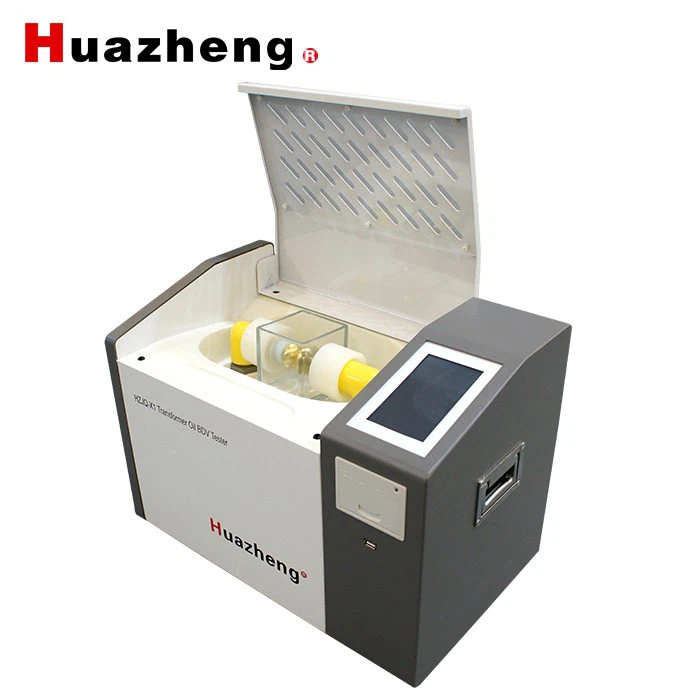
The HZJQ - X1 80KV Transformer Oil BDV Tester is great if you're working with transformer oils. It can test the breakdown voltage of the oil, which is crucial for ensuring the safety and performance of transformers.
And if you need to measure the flash point of a liquid, the Close Cup Flash Point Test Equipment is a must - have. The flash point is an important safety parameter, especially for flammable liquids.
Conclusion and Call to Action
Measuring the interfacial tension of a liquid - diamond interface is a valuable process with a wide range of applications. Whether you're in the manufacturing industry, research, or any other field that deals with materials and liquids, having accurate interfacial tension data can make a big difference.
If you're interested in getting an interfacial tension meter or any of the other testing equipment I mentioned, don't hesitate to reach out. We're here to help you find the right solutions for your specific needs. Contact us to start a procurement discussion and take your testing to the next level.
References
- Adamson, A. W., & Gast, A. P. Physical Chemistry of Surfaces, 6th ed., Wiley, 1997.
- Israelachvili, J. N. Intermolecular and Surface Forces, 3rd ed., Academic Press, 2011.