

How to choose a reliable 5kV Insulation Resistance Tester?
Dec 24, 2025
Selecting a reliable 5kV insulation resistance tester is a crucial decision for professionals working in electrical maintenance, testing, and quality control. An effective tester can provide accurate measurements, ensuring the safety and reliability of electrical systems and equipment. As a well - established supplier of 5kV insulation resistance testers, I've gathered years of industry experience and knowledge to help you make an informed choice.
Understand Your Testing Requirements
The first step in choosing a 5kV insulation resistance tester is to understand your specific testing needs. Different applications demand different features and capabilities from the tester.
For instance, if you are primarily testing power transformers, cables, and large electrical equipment, you'll need a tester with high accuracy and a wide measurement range. These applications often require measurements in the hundreds or thousands of megohms. On the other hand, if your work involves testing smaller electrical components such as motors and control circuits, a tester with a more compact design and a moderate measurement range might be sufficient.
Another aspect to consider is the working environment. If you're operating in harsh industrial settings, the tester should be rugged and able to withstand vibrations, dust, and moisture. For fieldwork, portability and battery life become important factors.
Accuracy and Precision
Accuracy is the most critical factor when it comes to insulation resistance testing. A reliable 5kV insulation resistance tester should provide accurate measurements within a specified tolerance. Look for testers that are calibrated to international standards, such as IEC (International Electrotechnical Commission) standards.
Precision refers to the repeatability of measurements. A tester with high precision will give consistent results when the same measurement is taken multiple times under the same conditions. When evaluating a tester, check the manufacturer's specifications for accuracy and precision. Some testers may offer additional features like auto - ranging, which can improve accuracy by automatically selecting the appropriate measurement range.
Measurement Range
The measurement range of a 5kV insulation resistance tester determines the minimum and maximum values of insulation resistance it can measure. A wider measurement range allows you to test a variety of electrical equipment.
Most standard 5kV insulation resistance testers offer a measurement range from a few kilohms to several teraohms. For general electrical maintenance, a range of 0.1 MΩ to 10 TΩ is usually sufficient. However, if you are working with high - voltage equipment or specialized electrical systems, you may need a tester with an even wider range.
It's important to note that the accuracy of the tester may vary across different parts of the measurement range. Make sure to check the accuracy specifications for the specific ranges you are likely to use.
Test Voltage
As the name suggests, a 5kV insulation resistance tester applies a test voltage of 5kV to measure the insulation resistance. However, some testers offer selectable test voltages, allowing you to choose different voltages based on the requirements of the test.
For example, you might need to use a lower test voltage for sensitive electrical components to avoid damage. Some testers can provide test voltages ranging from a few hundred volts to 5kV or higher. The ability to select the test voltage gives you more flexibility in different testing scenarios. When evaluating a tester, ensure that the test voltage is stable and accurate, as fluctuations in the test voltage can lead to inaccurate measurements.
Display and User Interface
A clear and easy - to - read display is essential for any electrical tester. The display should show the measured insulation resistance value, test voltage, and other relevant information such as battery status and measurement time.
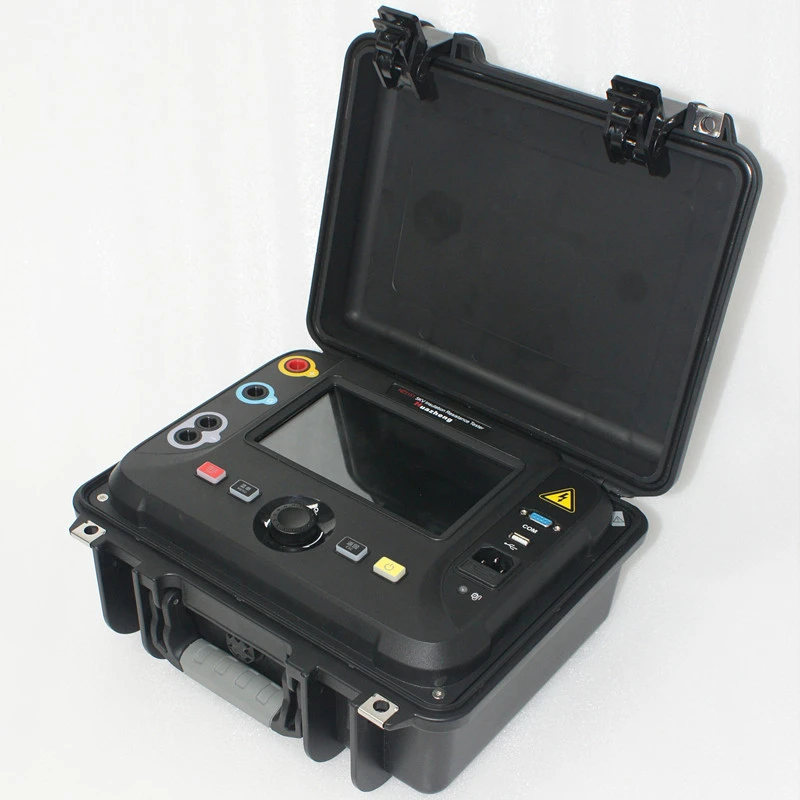

A large, backlit LCD display is preferable, especially if you are working in low - light conditions. The user interface should be intuitive, with well - labeled buttons and menus. Some modern testers come with touch - screen interfaces, which can make operation even more convenient.
Consider testers that offer features like data logging and storage. Data logging allows you to record measurement results for later analysis. Some testers can store hundreds or even thousands of measurement records, which can be useful for quality control and compliance purposes. You can then transfer the data to a computer for further processing.
Safety Features
Safety is of utmost importance when working with high - voltage electrical equipment. A reliable 5kV insulation resistance tester should have multiple safety features to protect the user and the equipment being tested.
Over - voltage protection is a must - have feature. It prevents the tester from being damaged in case of an unexpected voltage spike during the test. Isolation protection ensures that the user is not exposed to high voltages while operating the tester.
Some testers also offer features such as automatic discharge of the test voltage after the test is completed. This reduces the risk of electrical shock when disconnecting the test leads. Additionally, look for testers that are certified to relevant safety standards, such as UL (Underwriters Laboratories) or CE (Conformité Européene).
Brand Reputation and Support
When choosing a 5kV insulation resistance tester, consider the brand reputation of the manufacturer. A well - established brand with a long history of producing high - quality electrical testing equipment is more likely to offer a reliable product. Look for brands that are known for their innovation, quality control, and customer support.
Check online reviews and testimonials from other users to get an idea of the product's performance and reliability. A manufacturer with good customer support can provide you with technical assistance, training, and spare parts when needed.
As a supplier, we take pride in our brand reputation. Our 5kV Insulation Resistance Test Device is designed with the latest technology and strict quality control measures to ensure accurate and reliable performance. We also offer comprehensive customer support to help you with any questions or issues you may encounter.
Cost - Effectiveness
While cost is an important factor, it should not be the only consideration when choosing a 5kV insulation resistance tester. A cheaper tester may save you money upfront, but it may not offer the same level of accuracy, reliability, and features as a more expensive one.
Consider the long - term cost of ownership, which includes the initial purchase price, maintenance costs, and the cost of calibration. A high - quality tester may require less frequent calibration and maintenance, which can save you money in the long run.
We offer a range of 5kV insulation resistance testers to suit different budgets and requirements. Our HZ3151 5kV Insulation Resistance Tester provides a good balance of performance and cost - effectiveness, making it a popular choice among our customers. For more demanding applications, our HZJY - 25K 25kV Insulation Resistance Test Set offers advanced features and higher accuracy.
Conclusion
Choosing a reliable 5kV insulation resistance tester requires careful consideration of your testing requirements, accuracy, measurement range, test voltage, display and user interface, safety features, brand reputation, and cost - effectiveness. By taking the time to evaluate these factors, you can select a tester that meets your needs and provides accurate and reliable measurements.
If you have any questions or need further assistance in choosing the right 5kV insulation resistance tester for your application, please feel free to contact us. We are here to help you make the best decision and ensure the safety and reliability of your electrical systems.
References
- International Electrotechnical Commission (IEC) standards on electrical equipment testing.
- Technical literature from leading manufacturers of insulation resistance testers.