

What is the self - test function of a Partial Discharge Detector?
Oct 31, 2025
Partial discharge (PD) is a critical phenomenon in electrical insulation systems that can lead to the degradation of insulation materials and ultimately cause equipment failure. To ensure the reliable operation of electrical equipment, partial discharge detectors are essential tools for detecting and analyzing PD activities. One of the important features of a partial discharge detector is its self - test function, which plays a crucial role in maintaining the accuracy and reliability of the detector itself.
Understanding the Self - Test Function
The self - test function of a partial discharge detector is designed to verify the proper operation of the detector's internal components and circuits. It allows users to quickly check if the detector is functioning correctly before conducting actual partial discharge measurements. This function is particularly important because inaccurate or malfunctioning detectors can lead to false results, which may result in misjudgments about the condition of electrical equipment.
When a partial discharge detector performs a self - test, it typically generates a known test signal within the detector. This test signal mimics the characteristics of a real partial discharge signal, such as amplitude, frequency, and waveform. The detector then processes this test signal through its normal measurement and analysis channels, just as it would with a real - world PD signal.
Components Tested in the Self - Test
- Amplifier and Signal Conditioning Circuits: These are responsible for amplifying the weak partial discharge signals received from the sensors to a level that can be accurately measured and analyzed. During the self - test, the detector checks if these circuits can correctly amplify the test signal without introducing significant distortion or noise. If there is a problem with the amplifier, such as gain instability or excessive noise, the self - test will likely detect it.
- Filtering Circuits: Partial discharge signals often contain a wide range of frequencies, and filtering is used to isolate the relevant frequency components. The self - test verifies that the filtering circuits can effectively select the desired frequency bands and reject unwanted noise. For example, if a detector is designed to measure PD signals in a specific frequency range (e.g., 100 kHz - 1 MHz), the self - test ensures that the filters can accurately pass signals within this range and block others.
- Measurement and Analysis Modules: These modules are used to measure various parameters of the partial discharge signals, such as discharge magnitude, phase, and repetition rate. The self - test checks if these modules can accurately measure the known test signal and calculate the correct parameters. Any errors in the measurement or analysis algorithms can be detected through this process.
- Display and Communication Interfaces: The self - test also verifies the proper operation of the detector's display and communication interfaces. It ensures that the measured results can be correctly displayed on the screen and that the detector can communicate with external devices, such as computers or data loggers, if applicable.
Benefits of the Self - Test Function
- Reliability Assurance: By regularly performing self - tests, users can have confidence in the accuracy of the detector's measurements. This is especially important in high - voltage applications where the consequences of incorrect PD detection can be severe, such as power grid failures or equipment damage.
- Time and Cost Savings: Instead of having to send the detector to a calibration laboratory for every suspected malfunction, the self - test allows users to quickly identify and potentially resolve minor issues on - site. This can save a significant amount of time and money, especially for large - scale electrical testing projects.
- Compliance with Standards: Many industry standards require regular calibration and verification of partial discharge detection equipment. The self - test function helps users meet these requirements by providing a quick and convenient way to perform internal checks between formal calibrations.
Self - Test in Our Partial Discharge Detectors
As a leading supplier of partial discharge detectors, we understand the importance of the self - test function. Our products, such as the HZ - 9003C Portable Handheld Multifunctional Partial Discharge Tester and the HZJF - 9041D 4 Channels Partial Discharge Detector, are equipped with advanced self - test capabilities.
The HZ - 9003C Portable Handheld Multifunctional Partial Discharge Tester is designed for on - site testing of various electrical equipment. Its self - test function is user - friendly, allowing operators to initiate the test with a single button press. The tester then performs a comprehensive check of all its internal components and displays the test results on the high - resolution LCD screen. If any issues are detected, the tester provides clear error messages to guide the user in troubleshooting.
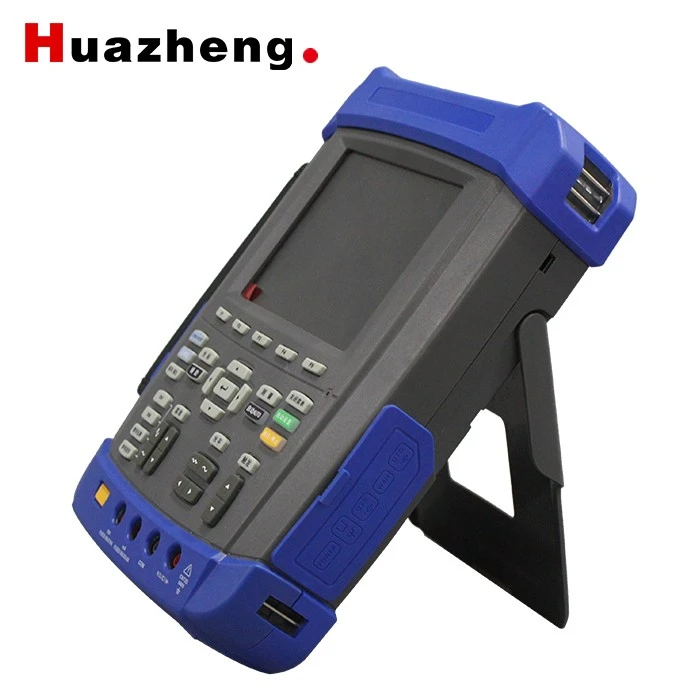

The HZJF - 9041D 4 Channels Partial Discharge Detector, on the other hand, is suitable for more complex testing scenarios where multiple channels of PD data need to be collected simultaneously. Its self - test function not only verifies the operation of each individual channel but also checks the overall system performance. This ensures that the detector can accurately measure and analyze PD signals from multiple sources without interference.
How to Use the Self - Test Function
Using the self - test function of our partial discharge detectors is straightforward. First, make sure the detector is properly powered on and all connections are secure. Then, navigate to the self - test menu on the detector's interface. Depending on the model, you may need to select the type of self - test (e.g., a basic quick test or a more comprehensive full - system test).
Once the test is initiated, the detector will automatically generate the test signal and perform the necessary checks. The entire process usually takes only a few minutes. After the test is completed, the detector will display the test results, indicating whether all components passed the test or if there are any issues that need to be addressed.
Conclusion
The self - test function of a partial discharge detector is an essential feature that ensures the accuracy, reliability, and usability of the equipment. It allows users to quickly and easily verify the proper operation of the detector before conducting critical partial discharge measurements. As a partial discharge detector supplier, we are committed to providing high - quality products with advanced self - test capabilities to meet the needs of our customers in the electrical testing industry.
If you are interested in our partial discharge detectors or have any questions about the self - test function or other features, please feel free to contact us for further discussion and procurement negotiation. We look forward to serving you and helping you ensure the safety and reliability of your electrical equipment.
References
- "Partial Discharge Detection and Measurement" - IEEE Standard 400.2
- "Guide to the Measurement of Partial Discharges" - IEC 60270