

What is the overload capacity of a CT PT Tester?
Jan 16, 2026
What is the overload capacity of a CT PT Tester?
As a supplier of CT PT Testers, I often encounter questions from customers about the overload capacity of these testing instruments. The overload capacity is a crucial parameter that significantly impacts the performance and safety of CT PT Testers during operation. In this blog post, I will delve into what the overload capacity of a CT PT Tester is, its importance, and how it relates to our product offerings like the HZCT - IV Power Frequency CT PT Analyser, HZCT - 100C 0.05% Accuracy Current Transformer CT PT Analyzer, and HZCT - 100B Variable Frequency Current Transformer Characteristic CT PT Tester.
Understanding the Concept of Overload Capacity
The overload capacity of a CT PT Tester refers to its ability to handle electrical loads that exceed its normal rated capacity for a short period without sustaining damage or experiencing significant degradation in performance. During the testing process of current transformers (CTs) and potential transformers (PTs), abnormal situations may occur, such as sudden surges in current or voltage. These surges can be caused by factors like short - circuits in the power system, switching operations, or faults in the transformers themselves.
A CT PT Tester with a high overload capacity can withstand these transient overload conditions without malfunctioning. This is essential because if the tester fails under overload, it not only disrupts the testing process but may also lead to inaccurate test results, which can have serious implications for the safety and reliability of the power system.
Importance of Overload Capacity
1. Ensuring Test Accuracy
When a CT PT Tester is exposed to an overload situation, its internal components may be affected. For example, excessive current can cause the winding of the tester to heat up, which may change its electrical properties. This can lead to inaccurate measurements of the CT or PT parameters such as ratio, phase angle, and excitation characteristics. A tester with sufficient overload capacity can maintain its accuracy even during short - term overloads, providing reliable test results.
2. Protecting the Equipment
Overloading can cause irreversible damage to the CT PT Tester. High - energy surges can burn out electronic components, melt wires, or damage integrated circuits. By having a good overload capacity, the tester can dissipate the excess energy safely and protect itself from permanent damage. This reduces the need for frequent repairs and replacements, saving costs for the users in the long run.
3. Safety Considerations
Incorrect operation of a power system due to inaccurate transformer testing can pose safety risks to personnel and equipment. For instance, if a CT malfunctions and an under - rated Tester fails to detect the problem because of overload - induced inaccuracies, it can lead to over - current in the power circuits, potentially causing fires or electrical shocks. A CT PT Tester with proper overload capacity helps to ensure that the power system operates safely.
Overload Capacity in Our CT PT Testers
Our company offers a range of CT PT Testers, each designed with a specific overload capacity to meet different application requirements.
HZCT - IV Power Frequency CT PT Analyser
The HZCT - IV Power Frequency CT PT Analyser is engineered to handle moderate overloads. It has been built with high - quality components that can withstand short - term overcurrents without significant distortion. This tester is suitable for routine testing of CTs and PTs in typical power distribution systems, where the probability of moderate overloads exists during normal operation and maintenance activities.
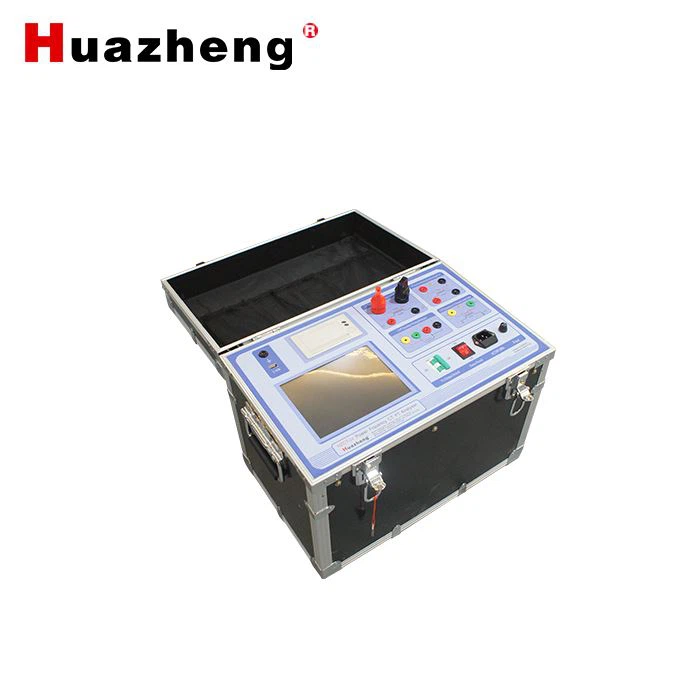

The internal design of the HZCT - IV includes advanced protection circuits that detect overload conditions and take appropriate measures to safeguard the equipment. For example, when an overload is detected, the tester can automatically adjust its internal resistance to limit the current flow and prevent damage to the sensitive measurement components.
HZCT - 100C 0.05% Accuracy Current Transformer CT PT Analyzer
The HZCT - 100C is a high - precision CT PT Analyzer with a relatively high overload capacity. As it is used for more critical and accurate transformer testing in power plants, substations, and high - voltage systems, it needs to be able to handle large - scale transient overloads. This analyzer is equipped with a robust power supply system and a high - capacity transformer that can cope with sudden increases in current or voltage.
The 0.05% accuracy specification of the HZCT - 100C is maintained even during short - term overloads due to its advanced compensation algorithms. These algorithms can correct for any minor deviations in the output caused by the overload, ensuring that the test results remain highly accurate.
HZCT - 100B Variable Frequency Current Transformer Characteristic CT PT Tester
The HZCT - 100B has a unique design that allows it to handle variable - frequency overloads. This is particularly important when testing CTs and PTs in systems with non - linear loads or in applications where variable - frequency drives are used. The tester's overload capacity is optimized to work across a wide range of frequencies, ensuring its reliability in diverse testing environments.
The HZCT - 100B uses a frequency - adaptive protection mechanism that can adjust the protection settings according to the operating frequency. This ensures that the tester is protected against overloads regardless of the frequency of the electrical signal being tested.
Factors Affecting Overload Capacity
1. Component Quality
The quality of internal components such as resistors, capacitors, and transformers has a significant impact on the overload capacity of a CT PT Tester. High - quality components can withstand higher temperatures and currents without degradation. For example, using high - grade enameled copper wire in the windings can reduce the resistance and heat generation during overloads, improving the overall overload performance of the tester.
2. Cooling System
An effective cooling system is essential for maintaining the overload capacity of a CT PT Tester. When the tester is overloaded, it generates more heat, and if this heat is not dissipated properly, it can cause the internal temperature to rise, leading to component failure. Our testers are equipped with either natural or forced - air cooling systems (depending on the model) to ensure that the temperature remains within a safe range even during overload conditions.
3. Design of Protection Circuits
The design of protection circuits in the CT PT Tester determines how quickly it can detect and respond to overloads. Advanced protection circuits can sense the overload within milliseconds and take actions such as disconnecting the power supply or reducing the current flow. This rapid response helps to minimize the damage to the tester and maintain its performance.
How to Choose a CT PT Tester Based on Overload Capacity
When choosing a CT PT Tester, customers should consider the specific requirements of their applications. If the testing is carried out in a stable power system with few load fluctuations, a tester with a moderate overload capacity may be sufficient. However, if the testing is done in a power system prone to short - circuits, switching surges, or non - linear loads, a tester with a high overload capacity is necessary.
It is also important to consider the future expansion plans of the power system. If there are plans to increase the load or add new equipment, it is advisable to choose a CT PT Tester with a higher overload capacity to ensure its long - term usability.
Conclusion
The overload capacity of a CT PT Tester is a vital characteristic that determines its performance, accuracy, and reliability in various testing scenarios. As a supplier, we understand the importance of this parameter and have designed our products, such as the HZCT - IV Power Frequency CT PT Analyser, HZCT - 100C 0.05% Accuracy Current Transformer CT PT Analyzer, and HZCT - 100B Variable Frequency Current Transformer Characteristic CT PT Tester, to meet the diverse needs of our customers.
If you are in the market for a CT PT Tester and need to learn more about the overload capacity or other features of our products, please feel free to contact us for a detailed discussion and procurement negotiation. Our team of experts is ready to assist you in selecting the most suitable tester for your specific requirements.
References
- Electrical Power Systems: Concepts and Analysis, by John J. Grainger and William D. Stevenson
- Transformer Testing Handbook, by E. L. Harlow